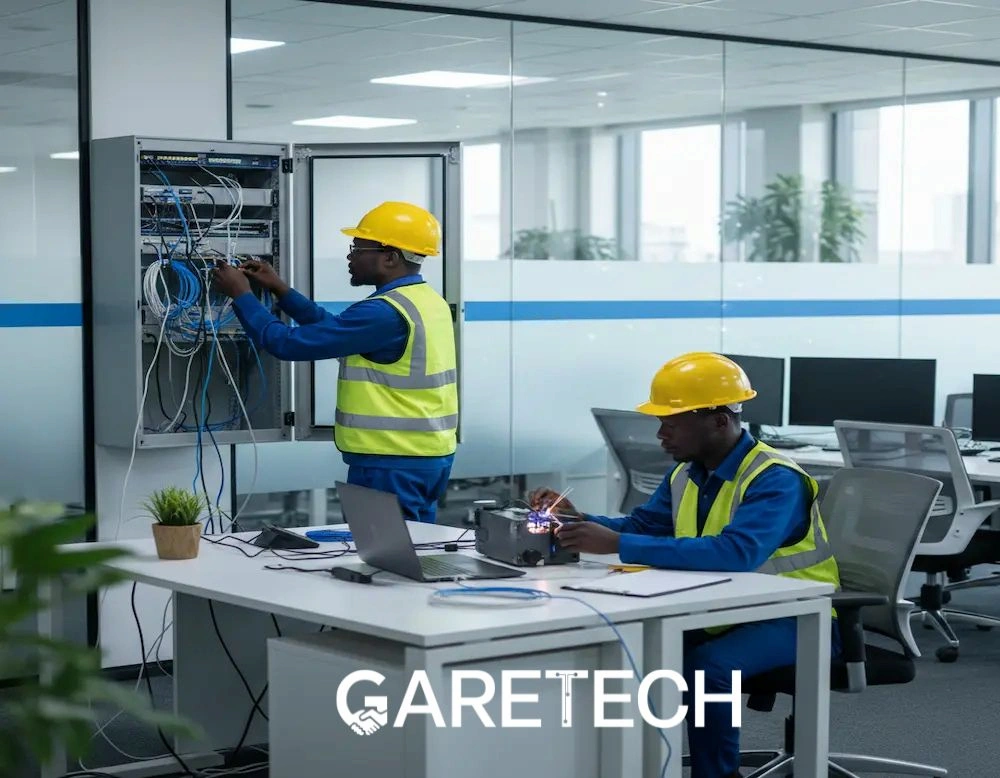
Fibre Optic Installation in Ghana: Complete Guide for Homes and Businesses
Fast and stable internet is no longer a luxury in Ghana, it is a daily need. Businesses depend on cloud software, CCTV monitoring, online meetings, and digital payments. Homes use it for streaming, online learning, and remote work. To meet this growing demand, Fibre Optic Installation has become the preferred solution for reliable, high-speed connectivity across the country.
From small shops in Kumasi to corporate offices in Accra and expanding residential communities in Takoradi, fiber technology is transforming how people connect. Modern Fibre Systems are helping businesses and homes enjoy faster speeds, stronger stability, and better long-term network performance. This complete guide explains everything you need to know about fiber internet in Ghana — how it works, its benefits, installation process, costs, and what to consider before getting started.
What Is Fibre Optic Internet?
Fibre optic internet uses thin strands of glass or plastic cables to transmit data using light signals instead of electricity. Because light travels faster and with less signal loss, fiber delivers:
- Higher internet speeds
- Stronger connection stability
- Better performance over long distances
- Lower latency (less delay)
Unlike traditional copper cables, fiber does not easily lose signal strength. This makes it perfect for modern businesses, institutions, and smart homes that require continuous connectivity.
In simple terms, fiber allows you to upload and download data much faster compared to older internet technologies. Whether you are sending large files, hosting online meetings, or streaming HD content, fiber ensures smooth performance.
Why Ghana Is Moving Toward Fiber Connectivity
Ghana’s digital economy is growing rapidly. More companies now operate online. Schools provide virtual classes. Hospitals store medical records digitally. Government services are becoming more automated.
As internet usage increases, traditional broadband networks struggle to keep up. Fiber offers a long-term solution. It supports higher bandwidth and can handle multiple users at the same time without slowing down.
Major cities like Accra, Tema, Kumasi, and Takoradi are seeing strong growth in fiber network expansion. Residential estates and commercial buildings are now including fiber infrastructure during construction.
How Fibre Optic Installation Works
Understanding the process helps you prepare properly. While every project may differ depending on property type and location, the general steps are similar.
1. Site Survey
The first step is a technical inspection. A trained technician visits the property to assess:
- Distance from the nearest fiber line
- Entry point into the building
- Cable routing path
- Equipment placement location
This stage is important because it determines cost, cable length, and installation method.
2. Network Planning and Design
After the survey, engineers design the connection layout. The plan may include:
- Underground trenching
- Overhead pole connections
- Wall-mounted internal routing
The design ensures the cables are protected and installed neatly.
3. Cable Laying
Fiber cables are carefully installed along the approved path. Since fiber cables are delicate, proper handling is very important. Sharp bends or pressure can affect performance.
4. Splicing and Connection
Special splicing machines join fiber strands together. This process requires precision to prevent signal loss.
5. Testing and Activation
After installation, technicians test signal strength and internet speed. An Optical Network Terminal (ONT) is installed to convert light signals into internet data. A router is then connected to distribute the network across devices. Once testing is complete, the connection is activated.
Key Benefits of Fibre Optic Installation in Ghana
1. High Speed
Fiber supports speeds from 20 Mbps to over 1 Gbps. This makes it ideal for:
- Video conferencing
- Cloud computing
- Online gaming
- Streaming HD and 4K content
- Large file transfers
Even when multiple users are connected, fiber maintains performance.
2. Reliable Performance
Fiber is less affected by bad weather or electrical interference compared to copper cables. This means fewer disruptions and more consistent connectivity.
3. Better for Businesses
Companies handling CCTV monitoring, remote servers, accounting software, and customer databases benefit from stable bandwidth. A strong network improves productivity and customer service.
4. Long-Term Investment
Although initial installation may cost more, fiber lasts longer and requires less maintenance. It is a future-ready solution that supports digital growth.
Types of Fiber Installations
Different properties require different installation methods.
Residential Installation
Best suited for:
- Homes
- Apartments
- Gated communities
These installations are usually simpler and involve shorter cable runs.
Commercial Installation
Designed for:
- Offices
- Retail shops
- Hotels
- Schools
Commercial properties require stronger internal networking and multiple access points.
Industrial Installation
Used in:
- Factories
- Warehouses
- Data centers
These projects require advanced network planning and backup systems
Key Equipment Used in Fiber Projects
Professional installers use specialized tools and equipment such as:
- Fiber optic cables
- Splicing machines
- Optical power meters
- Patch panels
- ONT devices
- Network racks
Using quality materials is very important. Poor-quality cables or connectors can lead to signal problems and expensive repairs later.
Cost of Fiber Installation in Ghana
The cost of installation depends on several factors:
- Distance from the main fiber line
- Type and size of building
- Cable length required
- Whether trenching is needed
- Equipment quality
- Labor charges
Urban areas may have slightly higher costs due to demand and infrastructure complexity. The best way to know the exact cost is to request a site survey from a professional installer.
Choosing the Right Installation Company in Ghana
Not every installation company delivers the same level of service. Some may offer lower prices but compromise on quality. It is important to look beyond price.
Before selecting an installer, consider:
- Their experience in Ghana
- Technical certifications
- Quality of materials used
- After-installation support
- Transparent pricing
Working with a trusted local company like GARETECH can make the process smooth and stress-free. An experienced team understands local building structures, power challenges, and regulatory requirements. They ensure proper cable routing, clean finishing, and thorough testing before completing the project.
Choosing the right company means you get a reliable connection that performs well for years.
Common Mistakes to Avoid
Many people make small mistakes that lead to bigger problems later. Here are common issues to avoid:
- Choosing the cheapest quote without checking quality
- Ignoring future upgrade needs
- Poor cable protection during installation
- Skipping signal testing
- Not planning for maintenance
Fiber networks are long-term investments. Proper planning ensures better results.
Maintenance and Support
Fiber networks require less maintenance than copper systems, but regular checks are still important.
Maintenance may include:
- Signal testing
- Cleaning connectors
- Inspecting cable condition
- Updating network equipment
Some providers offer service packages to ensure your network runs smoothly throughout the year.
Fiber for Homes in Ghana
Homes with multiple smartphones, smart TVs, laptops, and CCTV systems benefit greatly from fiber. It supports streaming, online learning, and remote work without buffering or lag.
With more families adopting smart home devices, fiber provides the bandwidth needed for smooth automation and monitoring.
Fiber for Businesses and Institutions
Businesses require a stable internet to operate efficiently. Fiber supports:
- Remote working teams
- Cloud-based accounting
- Digital payment systems
- Security monitoring
- Customer service platforms
Schools and universities use fiber for online learning and research access. Hospitals depend on stable connectivity for digital medical records and communication systems.
Reliable internet improves service delivery across all sectors.
The Future of Fiber Connectivity in Ghana
Ghana continues to invest in broadband expansion. As more communities gain access to fiber infrastructure, internet quality will improve nationwide.
Smart cities, digital banking, e-commerce, and online entrepreneurship all depend on strong internet networks. Fiber will remain the backbone of Ghana’s digital development.
As demand grows, more residential and commercial buildings will integrate fiber during construction, making installation easier and more affordable in the future.
Conclusion
Reliable internet is essential for modern life in Ghana. Whether for business growth, education, entertainment, or security systems, fiber technology delivers unmatched speed and stability.
Choosing professional Fibre Optic Installation ensures your network performs efficiently today and remains scalable for tomorrow. As cities expand and digital services grow, investing in fiber connectivity is not just a technical upgrade — it is a smart long-term decision.
If you are planning to upgrade your home, office, or commercial facility, consult experienced professionals who understand Ghana’s infrastructure and can deliver a secure, future-ready network.
Hi my loved one! I want to say that this article is amazing, great written and come with approximately all important infos. I would like to see more posts like this .